
All of the recipes and meals I ate for six weeks on an anti-inflammatory diet (and what I’m still eating to get 30 to 40 grams of fiber a day).
THE BACK STORY: Several months ago, I was dealing with significant pain in my hands (diagnosed as osteoarthritis by a hand doctor) and additional pain in my hip (which I had not seen a doctor for). I decided to eat an anti-inflammatory diet for two months to see if it would help the pain. Over the last few weeks, I have shared tidbits about this anti-inflammatory diet in my email updates and on Instagram, and I have been inundated with hundreds of requests to share more details on the recipes I’m using for the anti-inflammatory diet. Keep scrolling for the recipes and also the results I’ve seen from eating this way for almost two months.
A BIG DISCLAIMER: I am not a health care provider, a nutritionist, or any type of person that should be dispensing health advice. So to be crystal clear, I AM NOT DISPENSING HEALTH ADVICE. I am simply sharing what I ate (and what I’m still eating) in order to tackle health issues of my own. Please talk to a health professional before embarking on any major dietary or lifestyle change.
My Overall Anti-Inflammatory Goals for Two Months
“Anti-Inflammatory Diet” is a catch-all phrase for a way of eating that attempts to reduce inflammation by eliminating certain foods that can cause inflammation and boosting the intake of foods that are thought to be naturally anti-inflammatory.
➡️ IMPORTANT: What may cause inflammation/reactions is different for every person. It’s highly likely that some of the foods you’ll see below that I’ve eaten on an anti-inflammatory diet may not be good choices for you based on allergies, food sensitivities, or your own experience with what causes inflammation in your own body. Be wise in making decisions for yourself and your body.
I did a ton of research and reading about anti-inflammatory diets (including reading and studying The Mediterranean Diet, which is a widely studied, plant-forward eating model that is considered to be largely anti-inflammatory), and decided to follow these basic goals for two months:
- I eliminated the following foods completely:
- Red meat (this isn’t always completely necessary on an anti-inflammatory diet, but for me, personally, beef and pork sometimes make me feel sick to my stomach, so I decided to eliminate them while I ate anti-inflammatory).
- Processed/refined sugar (I used pure maple syrup and occasional honey to sweeten my morning oats)
- Processed/refined carbs (I cut out all gluten and all refined carbs, like bread, crackers, etc)
- Butter and all other oils (except for olive oil)
- All other processed/fried/fast foods
- I focused on eating a plentiful amount of the following:
- Olive oil
- Nuts and seeds (like almonds and roasted pumpkin seeds)
- Berries (LOTS of berries) and other colorful fruits
- Salmon (tried for twice a week)
- White fish (cod and halibut, mostly – have a lot of this in our freezer from the boys’ Alaska fishing trip last year)
- Other lean meats (I ate white chicken meat and shrimp occasionally)
- Avocados
- Dark, leafy greens (spinach and some kale)
- Tons of vegetables (broccoli, cauliflower, green beans, beets, carrots, cabbage)
- Sweet potatoes
- Lentils/beans
- Whole grains (oats, quinoa, brown rice)
- Dark chocolate (I had a square of 86% Ghirardelli dark chocolate every day – ok, sometimes more than that)
- Spices like turmeric, cinnamon, cloves
- I did NOT track calories – but I did track fiber. My goal was (and still is) 30 to 40 grams of fiber a day.
- I didn’t completely eliminate dairy, but I limited it to: cultured cottage cheese and small amounts of feta cheese or other sharp shredded cheese. I also continued to eat eggs (mostly in the form of these egg bites – made with double the veggies, meatless and with feta cheese).
What I Ate on My Anti-Inflammatory Diet
⬇️ Recipes on My Website That Are Anti-Inflammatory ⬇️
I made all of these frequently and ate them with reckless abandon.
- Thick and Creamy Instant Pot Lentil Soup
- Smoky Lentil and Potato Soup (I subbed in sweet potatoes, although “regular” potatoes are often fine on an anti-inflammatory diet)
- Lentil Tacos (I ate these over brown rice or quinoa and loaded them up with lots of toppings, like tomatoes, olives, small amount of shredded sharp cheddar cheese sometimes but not always, avocados, roasted pumpkin seeds, etc)
- Black Beans and Rice (I ate this over the brown rice blend linked below)
- White Bean Tuna Salad
- Buddha Bowls (I left the soy sauce out of the dressing and just used a healthy pinch of salt and a bit of water)
- Yum Yum Bowls (I used olive oil in the sauce/dressing)
- Chicken Souvlaki Bowls (I ate these meatless a lot and just roasted double the veggies and regularly included roasted sweet potatoes)
- Chicken Fajita Bowls (I roasted even more veggies for these – like asparagus and carrots – and I served mine over brown rice or quinoa)
- Chicken Burrito Bowls (I skipped the dressing on mine and served with brown rice)
- Quinoa and Red Bean Chili
- Instant Pot Lentil Chili (I made it meatless for this anti-inflamm diet and also omitted the sugar but added 1/4 teaspoon baking soda to cut the acidity a bit)
- Fire-Roasted Tomato and Black Bean Soup
- Sweet Potato Black Bean Burrito Bowls (I made this meatless and skipped the creamy sauce)
⬇️ The Other Go-To Recipes I Made Up to Survive {Recipes Below} ⬇️
⭐️ I am highly aware that none of the food photos below are professional-grade. I took them as a way to document my own journey so I could remember what I ate and revisit meals I liked. I had no intention of sharing them until I received such a huge response asking for details…so the plating and lighting isn’t always ideal. But it helps give you an idea of what a lot of my meals looked like.
Also, you’ll see from the “recipes” below that most of these rely on leftovers and bulk-roasted veggies. I can’t overstate how meal prepping roasted veggies has saved me – many of my lunches and dinners were compiled from fridge leftovers, which made throwing together a meal brilliantly easy.
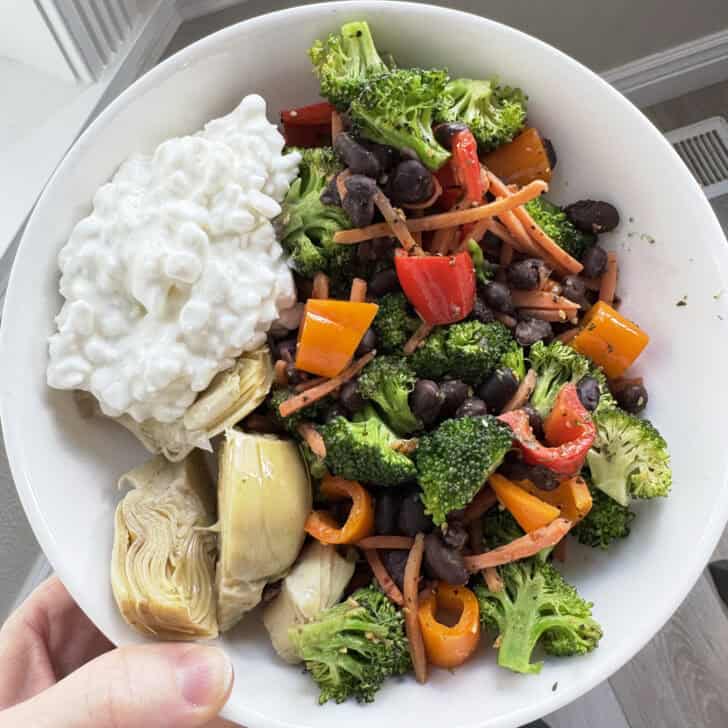
- SKILLET VEGGIE BOWL: Heat a tablespoon of olive oil in a skillet and add 1 to 2 cups of fresh veggies you have on hand (in the photo, I added broccoli, bell peppers, and shredded carrots, but this is highly adaptable). Sprinkle with salt and pepper and cook for 2 to 3 minutes until the veggies are crisp tender. You can add a couple tablespoons broth or water, if needed. Add 1/2 cup black beans or cooked lentils (rinsed and drained). Season with salt and pepper. Cook until heated through. Season again, to taste. Serve with drained, canned artichoke hearts and cultured cottage cheese.
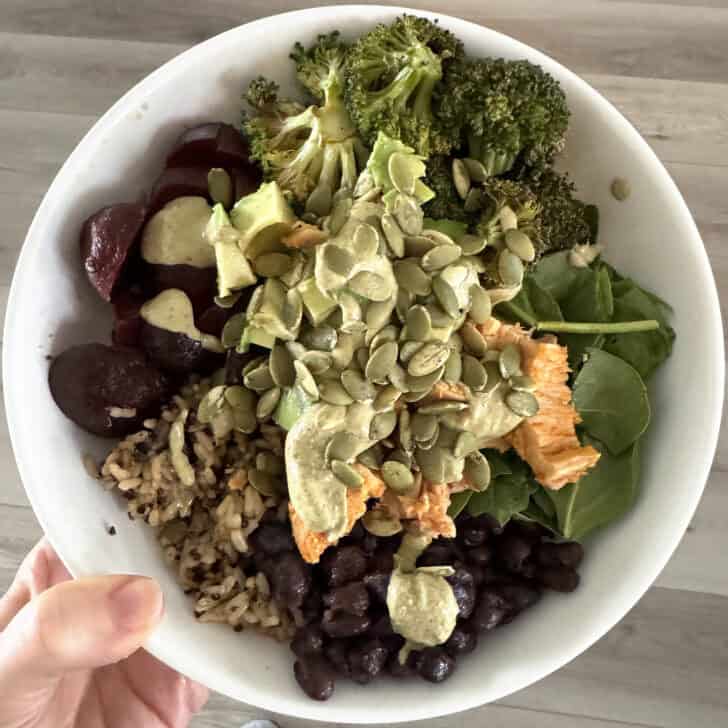
- TUNA BROWN RICE AND BLACK BEAN BOWL: In a bowl, add warmed brown rice or quinoa (I love this brand), drained canned tuna (pictured is the Fishwive brand of spicy albacore tuna at Costco), fresh spinach, canned black beans, cooked beets (I use the Love Beets cooked beets from Costco), diced avocado, leftover roasted veggies, Bitchin’ spinach artichoke sauce, roasted pumpkin seeds.
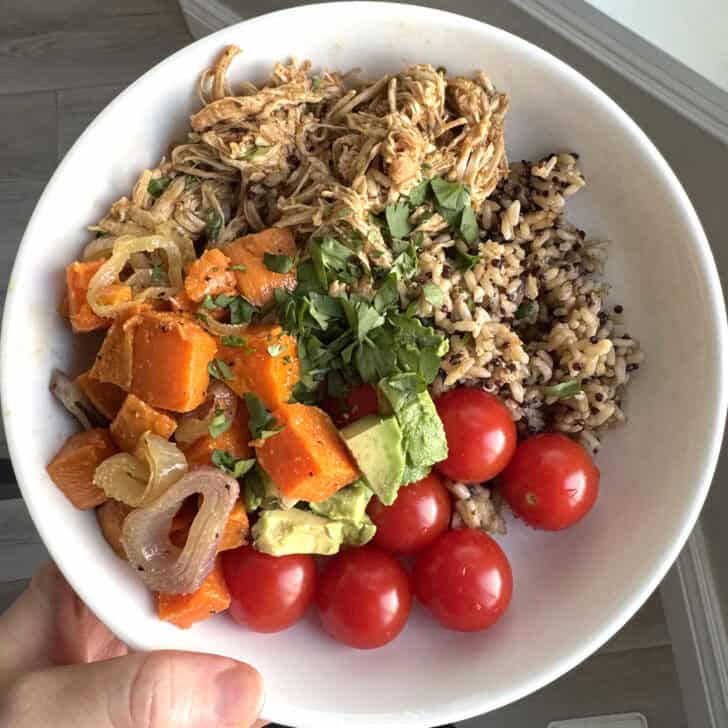
- SALSA VERDE SWEET POTATO BOWL: In a bowl, add salsa verde chicken, roasted sweet potatoes and onions, diced avocado, brown rice or quinoa, cherry tomatoes, and chopped cilantro.
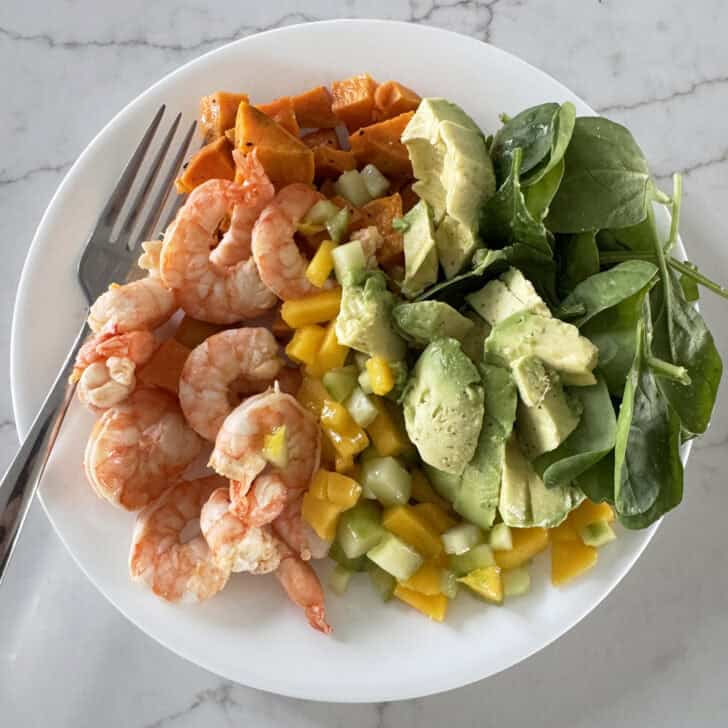
- SHRIMP WITH MANGO CUCUMBER SALSA: Season 1/2 to 1 pound shrimp with salt and pepper. Heat a tablespoon of olive oil in a skillet and cook the shrimp until pink and cooked through, just a couple of minutes, flipping once. Remove to a plate and serve with leftover roasted veggies (shown: sweet potatoes), fresh spinach, diced avocado and mango-cucumber salsa. For the salsa, finely dice 1/2 English cucumber and 1 medium mango and toss with a pinch of salt and pepper, 1 tablespoon lime juice and a drizzle of olive oil. (SO YUMMY)
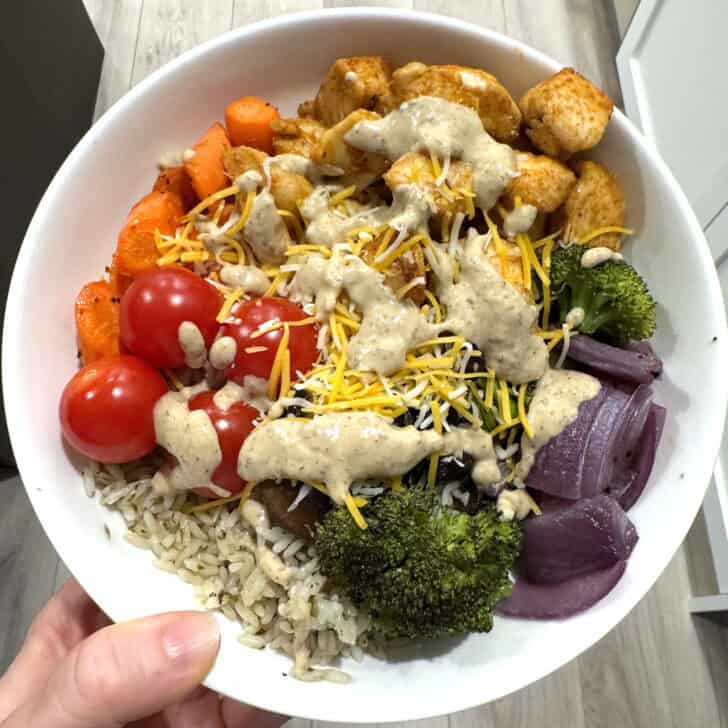
- TEX-MEX CHICKEN AND VEGGIE RICE BOWL: Season boneless, skinless chicken breast pieces with a pinch of: salt, pepper, garlic powder, cumin, chili powder and oregano. Drizzle chicken with olive oil and toss. Air fry at 390 degrees F for 8 to 9 minutes or pan-fry in a skillet in olive oil until cooked through. Serve with cilantro lime rice (homemade or the heat-and-serve packets from Costco are good), roasted veggies (pictured: carrots, broccoli, red onions). Serve with a light sprinkle of cheese and Bitchin’ sauce, if desired.
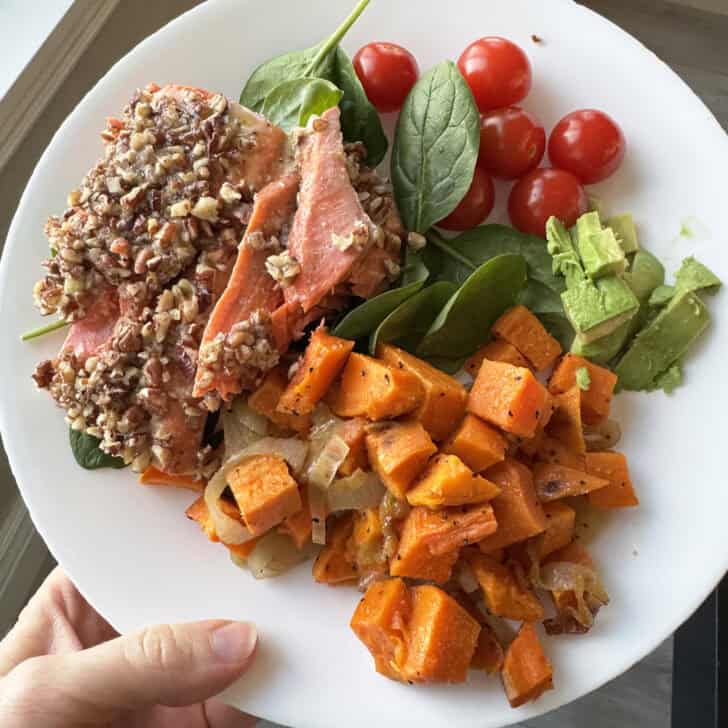
- MAPLE PECAN SALMON PLATE: In a small bowl, whisk together 1 tablespoon olive oil, 1 tablespoon pure maple syrup, 1/2 teaspoon salt, 1/4 teaspoon ground mustard, and a pinch of black pepper. Brush this mixture over the top of 2 to 3 salmon filets. Press finely chopped pecans into the top of each filet. Bake at 325 degrees F for 20 minutes until cooked through. Serve on a bed of fresh spinach with leftover roast veggies (pictured: sweet potatoes), diced avocados, and cherry tomatoes.
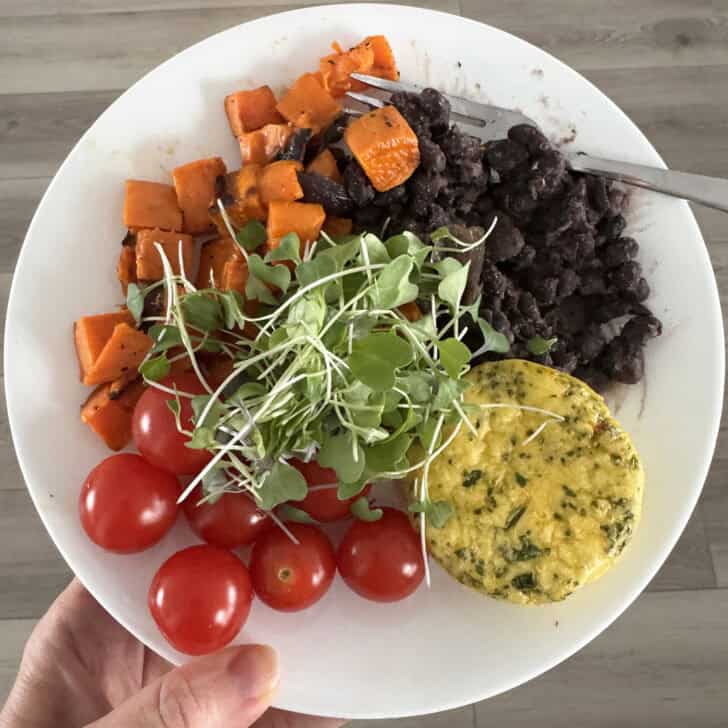
- EASY BLACK BEAN LUNCH OR BREAKFAST PLATE: Heat up leftover roasted sweet potatoes (or other veggies) in a skillet or in the microwave with 1/2 cup drained black beans (or lentils). Season well with salt and pepper. Serve on a plate with egg bite or two (I make these meatless with double the veggies and using feta cheese), cherry tomatoes and microgreens (or spinach).
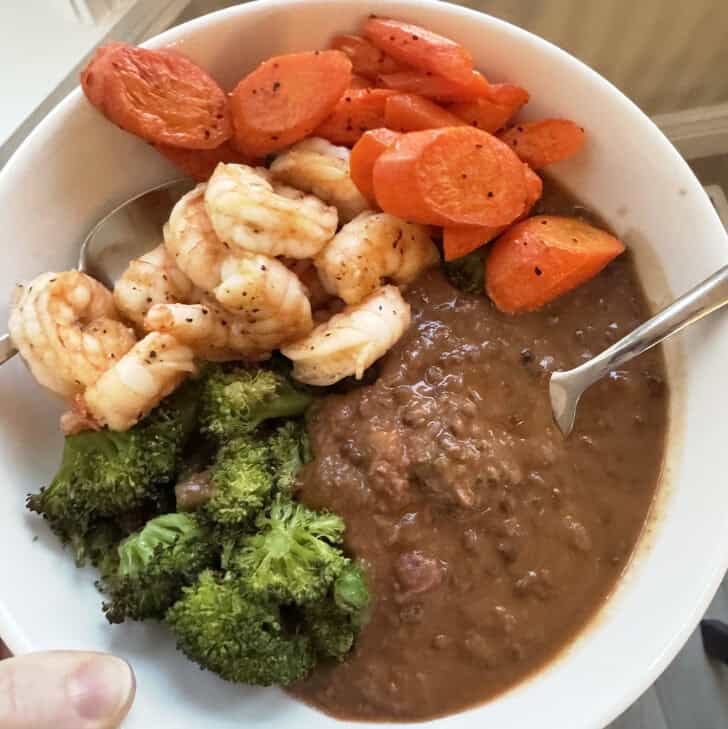
- SHRIMP AND LENTIL BOWL: Serve this lentil soup or warmed Tasty Bite Madras Lentils in a bowl with roasted vegetables (pictured: carrots and broccoli) and leftover cooked shrimp (optional).
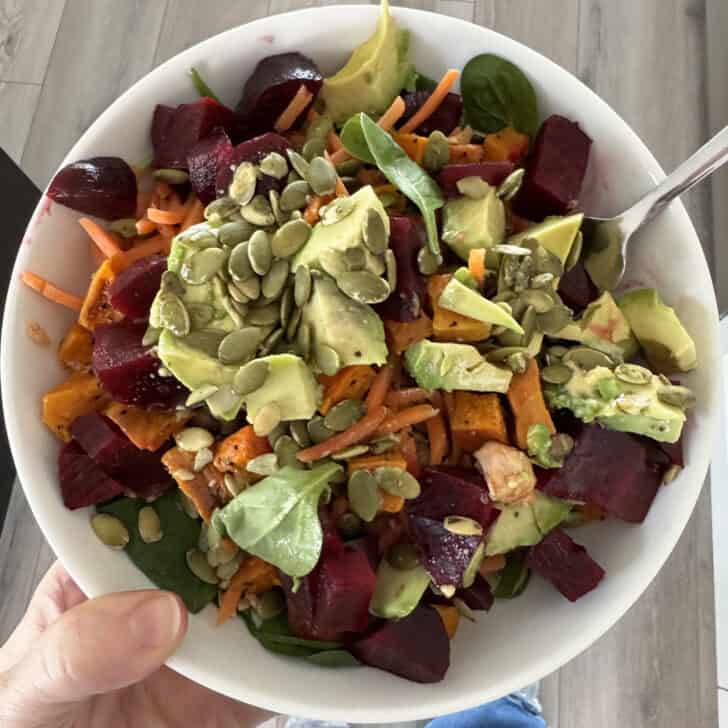
- LENTIL BEET SALAD: (This is one of my favorites on this list – I eat it often for lunch!) In a bowl, layer 1/2 cup cooked and lightly warmed brown rice or quinoa, 1/2 can tuna or leftover salmon or other protein (can also omit for meatless…still tasty), 1 cup chopped fresh baby spinach/kale mix, 2-3 small cooked beets, diced (I use Love Beets from Costco), handful shredded carrots, about 1/3 can lentils (rinsed and drained), 1/2 avocado, diced, and roasted pumpkin seeds (Go Raw brand from Costco or ones from Trader Joe’s). Drizzle with this dressing (I usually just eyeball it): 1 tablespoon extra virgin olive oil, 1 tablespoon apple cider vinegar or fresh lemon juice, 1/4 teaspoon Dijon mustard, pinch garlic powder, salt, turmeric, black pepper.
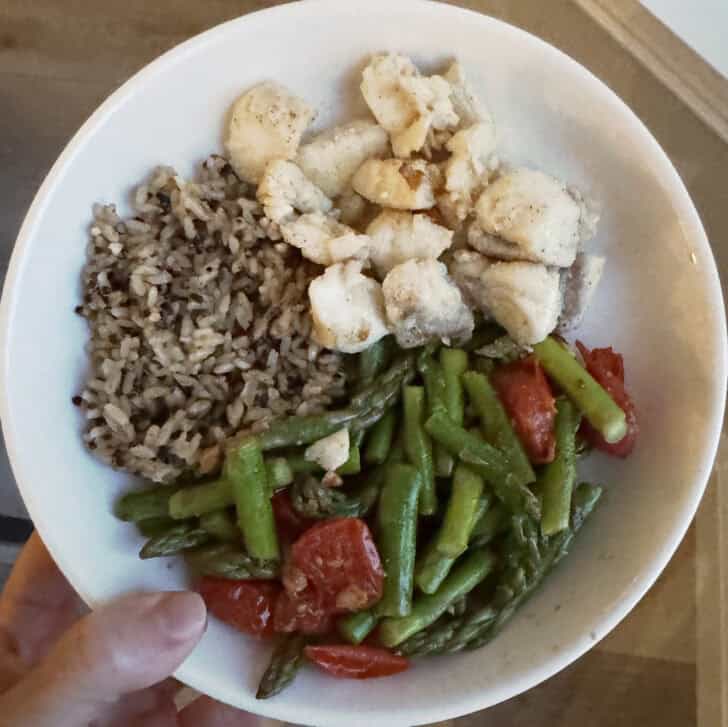
- SKILLET GARLICKY COD, ASPARAGUS AND TOMATOES: (I love this one! I probably made it most out of all the dinner ideas in this post) In a skillet, heat 1 tablespoon extra virgin olive oil. Cut cod, halibut or other white fish into 1-inch pieces and pat dry; season with salt and pepper. Cook in a single layer in the hot oil for 30 to 60 seconds. Flip and cook another minute or two. Add 2 cloves garlic and continue cooking, stirring, for another minute or so until the fish is cooked through. Scrape the fish onto a plate. Heat another tablespoon of olive oil in the skillet. Add 1 to 2 cups halved cherry tomatoes and 1 to 2 cups of chopped asparagus, green beans or broccoli. Sprinkle with salt and pepper. Cook until the tomatoes have burst and the veggies are crisp-tender. Stir in the reserved fish and heat through. Season with salt and pepper, to taste, if needed. Serve over brown rice (optional).
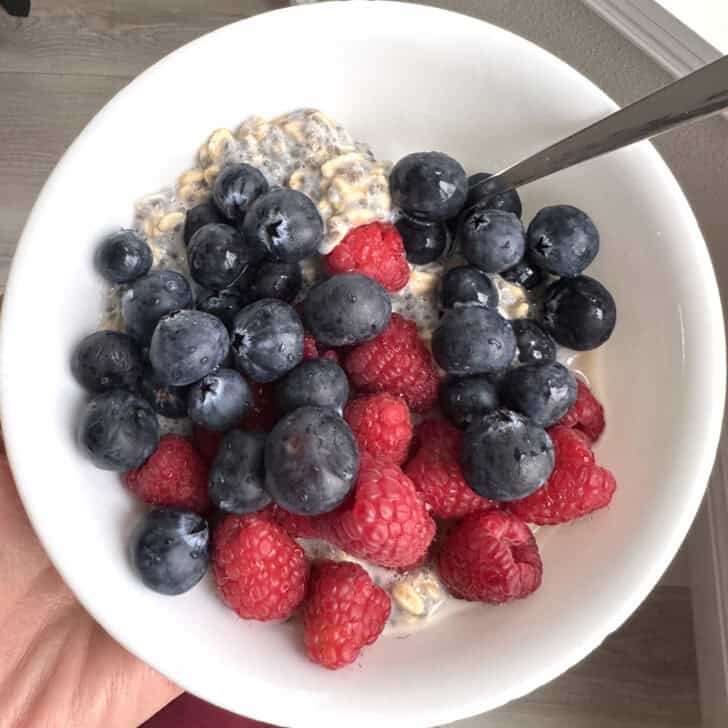
- OVERNIGHT CHIA OATS: (This has been my go-to breakfast for weeks now – it has a ton of fiber and is so delicious). I never liked overnight oats until this recipe. In a container with a lid, combine 1 cup rolled oats (I use the sprouted rolled oats from Costco), 2 tablespoons chia seeds, 2 tablespoons basil seeds (these have double the fiber and protein as chia seeds and are tasteless – they rehydrate a bit differently than chia seeds – more of a tapioca-consistency – you can use all chia seeds or all basil seeds in this recipe, but I prefer the texture of doing half and half of each), 1/4 teaspoon cinnamon, pinch of salt, 2 1/4 cups unsweetened almond milk (or milk of choice), 1 tablespoon pure maple syrup (plus more, to taste, if you’d like it sweeter). Stir well. Cover and refrigerate at least 12 hours but preferably 18 hours or more. I scoop out 1/3 of this oat mixture every morning and top with fresh berries. It has a pudding-like consistency, but you can add more milk and adjust consistency however you like. If you don’t like the idea of eating cold oats, neither did I! But this recipe converted me. I love it. You can heat it up, if you’d like, before eating. You can see me make this oats here on Instagram.
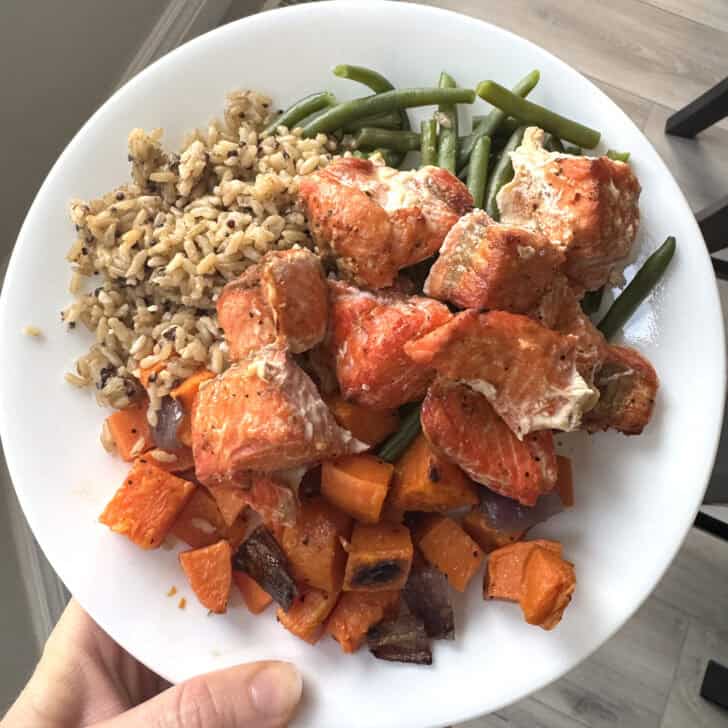
- LEMON GARLIC SALMON BITES WITH BROWN RICE AND VEGGIES: Cut skinless salmon into 1-inch pieces. Drizzle with olive oil. Season with a pinch of salt, pepper, and garlic powder. Air fry at 390 degrees F for 6 to 8 minutes until cooked through or pan-fry in olive oil until cooked through. Off the heat, drizzle with fresh lemon juice. Serve with brown rice or quinoa, leftover veggies (pictured: roasted sweet potatoes and skillet green beans).
3 Tips That Helped Me Stick to This Anti-Inflammatory Diet
I quickly realized there were a couple things I needed to do in order to be successful at eating this way. Mostly, this has included prepping food in advance so that I can quickly pull it out of the fridge for easy lunches and dinners.
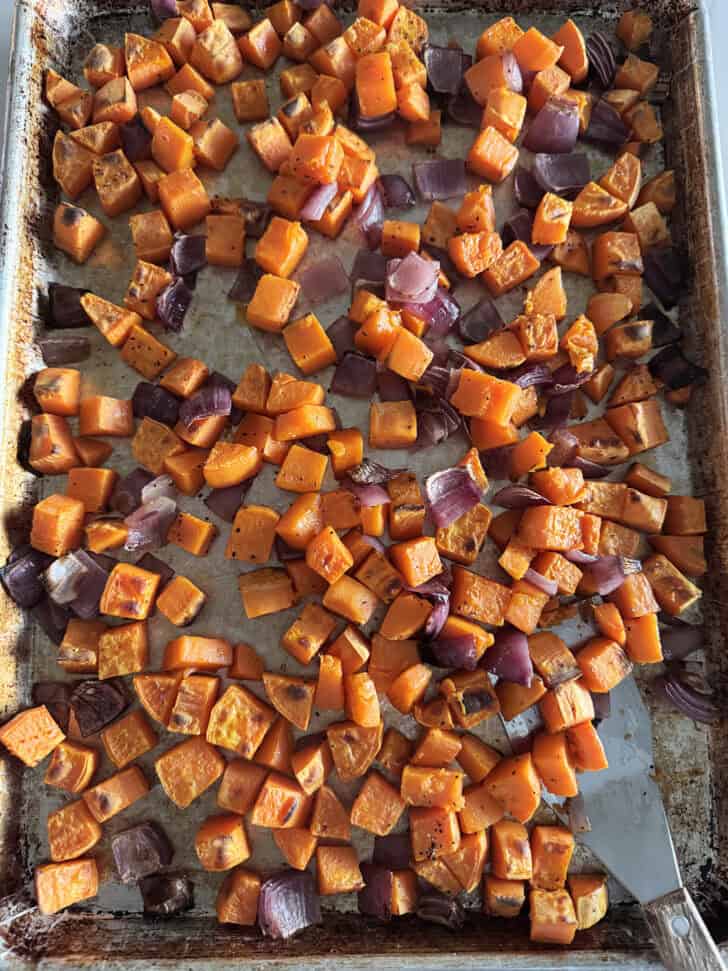
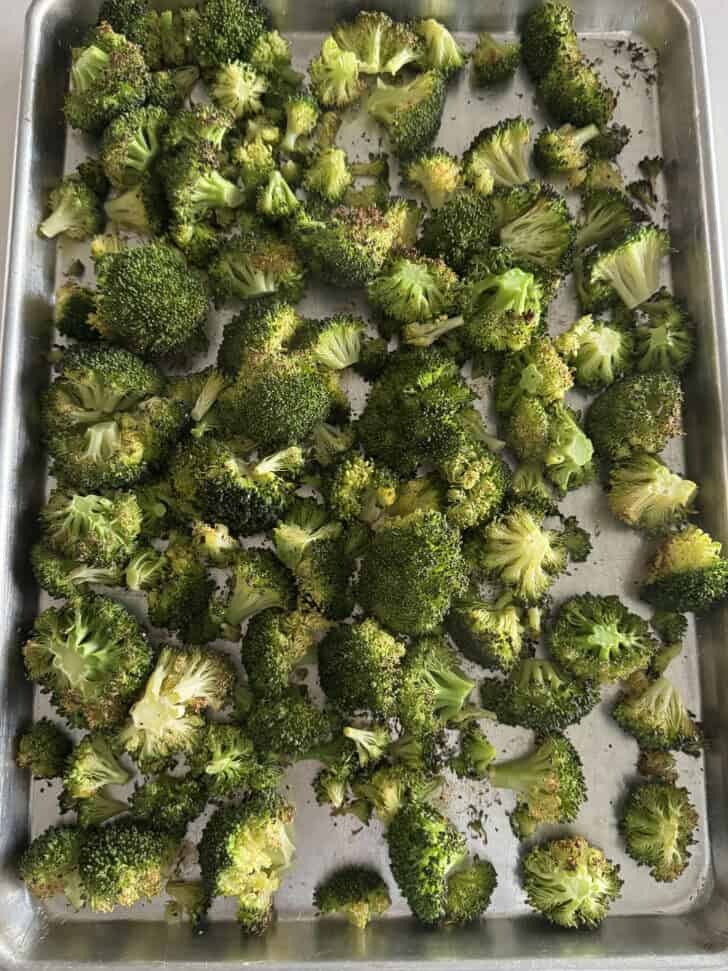
- I roast sheet pan after sheet pan of vegetables (at the beginning of the week and then usually once again during the week). Broccoli, cauliflower, green beans, asparagus, sweet potatoes, and more. They keep well in the fridge and reheat great in the microwave if I want to eat them warm (I’m a weirdo and often like leftovers cold, too – don’t judge). I almost always roast sweet potatoes with chopped shallots or chunks of red onions. I love the flavor it gives the sweet potatoes. For vegetables like broccoli, cauliflower, carrots, etc. I drizzle veggies with olive oil, salt and pepper and roast in a 350 degree F oven until crisp-tender, about 15 minutes or so (carrots take longer, about 20 to 25 minutes). For roasted sweet potatoes and onions, I drizzle with olive oil, salt and pepper, and roast in a 425 degree F oven for about 20 minutes, shaking the pan or tossing once.
- I also keep several ready-to-eat (or heat) foods on hand in the pantry. I’ll detail those below. This helps make throwing together a meal really easy.
- I track my fiber (and water intake). There’s no way that I would consistently be able to get 30 to 40 grams of fiber a day without tracking it. This is coming from someone who HATES tracking any food metric on an app. I’ve never tracked my calories or macros, because I like to eat intuitively (it benefits my mental and emotional health much better to do so). But, when it comes to fiber and water – I knew I wasn’t getting nearly enough of either before I started eating this way. Tracking it was the quickest way for me to start to make connections about where I could easily bump up my fiber intake (and what foods and serving sizes would get me there). I use the Chronometer app and customize it to take off the metrics I don’t want to see. I basically just look at fiber, protein, and a few other nutrients.
Heads Up About Fiber and Water: You probably know this already, but if you are boosting your fiber intake, it is easier on your body to increase gradually. Additionally, the more fiber you eat, the more water you need to drink. You can easily feel bloated and constipated when eating a lot of fiber if you aren’t getting enough water. I aim to get 64 to 80 ounces of water a day (for 30 to 40 grams of fiber). And I track this on my Chronometer app, because if I don’t, I’m horrible at drinking enough water.
⬇️ Here is a quick list of ready-to-eat foods that helped a lot: ⬇️
I pick up most of these at Costco, but they can easily be found at other grocery stores or online. I included links (some are affiliate links from Amazon) so you can see what they look like and source them wherever is best for you.
- Go Raw Sprouted roasted pumpkin seeds
- Seeds of Change microwaveable brown rice and quinoa
- Tasty Bite Madras lentils (Technically these probably aren’t in the 100% anti-inflammatory category, but I still ate them a time or two, and felt great about it)
- Bitchin’ sauce (Dill pickle flavor is my favorite, which sounds weird, but I drizzled it on a lot of meals – especially all those recipes I linked above that are normally served with a creamy dressing)
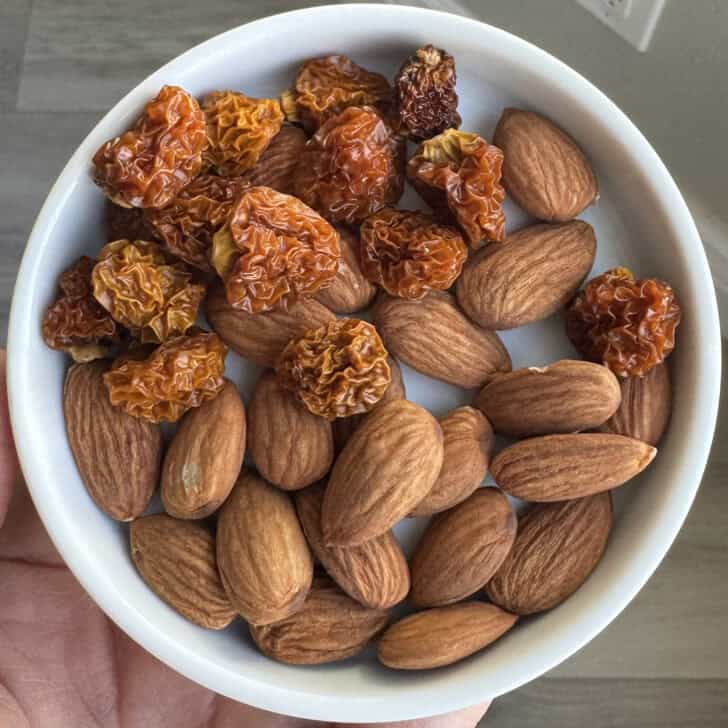
- Golden berries (I ate a few of these every afternoon with almonds)
- Canned lentils (I’ve never bought canned lentils before, but they became a staple for me – I bought this brand on Amazon and also the ones at Trader Joe’s)
- Love Beets cooked beets
In my intentional effort to eat more nuts and seeds, I have been eating a handful of almonds every afternoon. Sometimes paired with the tart, dried golden berries linked above, sometimes not.
Results From My Anti-Inflammatory Diet
This is what everyone wants to know, right? DID IT WORK??? I’m going to be really honest with you about how it’s gone.
As of the publishing of this blog post, I’ve been eating an anti-inflammatory diet for six weeks.
Hand and Hip Pain Results: For me, eating this way unfortunately didn’t help my hand or hip pain. In fact, several weeks into eating anti-inflammatory, I was feeling discouraged by this, so I reached out to a physical therapist I’ve seen in the past for something different. After an evaluation, he assured me that we could get to the bottom of the hand and hip pain. So far, I have had four sessions, and already, my hand and hip pain is vastly improved! I don’t know why I didn’t think to see a PT before! I am feeling very encouraged by this, which helps me feel less annoyed that my eating changes didn’t affect my pain at all.
HOWEVER…(keep reading for some encouraging results)…
I have very high cholesterol (most of my siblings do, as well) and have for decades. I have resisted going on medication, but my numbers continue to go up year after year. My LDL is high (so is my HDL, which is a good thing).
Last week, I had bloodwork done and met with my doctor. Guess what??
My LDL cholesterol dropped from 183 to 121!!! I about fell off the exam table when my doctor showed me the bloodwork results! I could not believe it! Neither could my doctor. I’ve tried to make other lifestyle and dietary changes in the past that had little to no effect on my cholesterol (granted, I was never as diligent as I have been with this new eating pattern).
I was so encouraged! I still have progress to make to get my LDL number below 100, but now I’m hopeful it can happen!
Now, let me be super clear…I’m not saying that my anti-inflammatory diet was the sole reason for the cholesterol drop. I also have been on HRT for about a year, and there is a lot of evidence that estrogen can have a positive effect on cholesterol (although, I have had blood work every few months over the last year and my cholesterol hasn’t dropped until now).
Additionally, I have lost a few pounds over the last few weeks eating this way. While that wasn’t my goal (and I hesitate to even bring it up, because I detest talking about weight loss – I’m a huge proponent of “strong over skinny” and “my body is an instrument not an ornament”) it does bear mentioning since weight loss can also have a positive effect on cholesterol.
My doctor seems to think that it was likely the increase in fiber that had a huge impact on my cholesterol numbers (rather than the anti-inflammatory diet as a whole, although that was definitely the vehicle for me to get so much fiber). As he explained, fiber, especially soluble fiber found in foods like oats, beans, avocados, etc, binds LDL cholesterol and removes it before it gets to the blood.
As with all health things, it’s hard to know exactly what caused the drop in cholesterol, but I’m considering the significant change a huge success from the last six weeks.
How and What I’m Eating Going Forward
So…what does this mean going forward? Well, certainly eating a plant-forward diet is a great way to live life. There are so many benefits to doing so.
But I also can’t (don’t want to?) remain as strict as I have been on this anti-inflammatory diet forever. I’ve been cooking two meals – one for me, one for my family – and that isn’t sustainable. Plus I want to keep my blog going with every day, family-friendly recipes made from scratch. And I really do think there’s room for all of that while also keeping tabs on my health (and cholesterol!).
My plan is to continue following an anti-inflammatory regimen pretty strictly for breakfast and lunch. I’m almost always home during the day, so it’s easy to do, and honestly, I really do love vegetables, so it isn’t hard. And then for dinner, I’ll continue to include lots of vegetables in our dinner lineup, but I’ll eat the same thing I’m making my family for dinner (including dessert when I feel like it!).
My biggest goal is to continue to get 30 to 40 grams of fiber a day. After eating this way for over a month, I’m finding that it’s actually quite easy to do – which is a statement I never thought I’d make, because before this, I was probably eating less than 15 grams of fiber a day. My morning chia oats are non-negotiable. With berries, that breakfast packs nearly 17 grams of fiber. If I include 1/2 cup of black beans or broccoli at lunch time, I’m nearly to the 30 gram mark already.
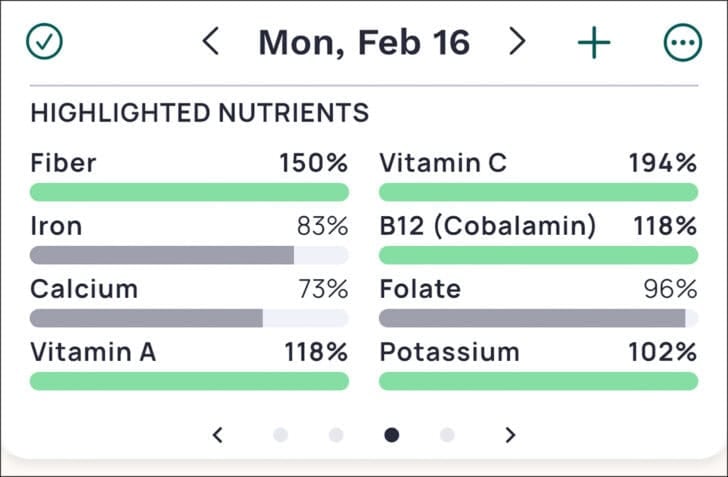
Here’s a quick look at one of my days (tracked in the Chronometer app). I have my fiber goal set to 30 grams a day. This particular day I had chia oats with fresh berries for breakfast (recipe above in the list), the lentil beet salad (recipe also up above), and salmon, green beans and brown rice for dinner. This put my fiber at 150% which is 45 grams. 🎉
I’ll be getting blood work redrawn in about six months, so I can see how a more moderate approach is helping (or not helping). And then I’ll evaluate again!
I know this was a lot of information, and most of it was really tailored to me and my lifestyle, but I hope it was helpful in some way, especially if you are are wanting some simple recipe ideas for anti-inflammatory meals!
Remember that I am not an expert on any of this. I’m just a 40-something woman and mom trying to take control of her own health (this phase of life is no joke!).
It’s likely that some of the things I stated in this post will upset someone or others may have their own science-baked claims to dispute everything I said. 😜 I’m all for a healthy discussion below in the comments! But keep it friendly and kind. At the end of the day, I’m just sharing in the hope that it can be helpful to someone else. 💗
The post What I Ate for Six Weeks on an Anti-Inflammatory Diet {30+ Grams of Fiber a Day} appeared first on Mel's Kitchen Cafe.
from Mel's Kitchen Cafe https://ift.tt/oMrm7JS



0 Comments